
- Table of Contents
- Introduction
- What is Human-AI Collaboration?
- How Does Human-AI Collaboration Look Like?
- Healthcare:
- Finance:
- Manufacturing:
- Customer Service:
- Marketing:
- Benefits of Human-AI Collaboration in the Hybrid Workforce
- Increased Efficiency:
- Enhanced Decision-Making:
- Improved Creativity and Innovation:
- Personalized Experiences:
- Scalability:
- Skill Development:
- Challenges and Risks in Human-AI Collaboration
- Trust and Acceptance:
- Bias and Fairness:
- Job Displacement:
- Data Privacy and Security:
- Integration Complexity:
- Dependency on Technology:
- Human-AI Collaboration Skills You Need to Master
- 1- Data Literacy:
- 2- Critical Thinking:
- 3- Emotional Intelligence:
- 4- Adaptability:
- 5- Collaboration Skills:
- 6- Ethical Awareness:
- The Role of Humans in an AI-Driven Future
- Strategic Decision-Makers:
- Creative Innovators:
- Ethical Guardians:
- Relationship Builders:
- Lifelong Learners:
- Interdisciplinary Collaborators:
- Conclusion
Introduction
The emergence of artificial intelligence (AI) has transformed the landscape of work, fostering a new paradigm where human capabilities are enhanced by AI technologies. This collaboration between humans and machines is not merely about automation; it represents a synergistic relationship that can drive innovation, efficiency, and creativity. As organizations increasingly adopt hybrid work models, the interplay between human intelligence and AI becomes crucial. This blog post will delve into the concept of human-AI collaboration, illustrating its dynamics, benefits, challenges, and the essential skills needed to thrive in this evolving environment. By understanding how humans and AI can work together, we can better prepare for a future where both coexist harmoniously, enhancing productivity and fostering a more engaged workforce.
What is Human-AI Collaboration?
Human-AI collaboration refers to the partnership between human workers and AI systems, where both entities contribute their strengths to achieve common goals. This collaboration encompasses various forms, including decision-making support, task automation, and data analysis. Unlike traditional automation, which often replaces human roles, human-AI collaboration aims to augment human capabilities, allowing workers to focus on higher-level tasks that require creativity, emotional intelligence, and critical thinking.
AI systems, powered by machine learning and data analytics, can process vast amounts of information quickly and accurately, identifying patterns and insights that may elude human cognition. Conversely, humans bring contextual understanding, ethical reasoning, and interpersonal skills to the table—qualities that AI currently lacks. This complementary relationship creates a powerful synergy, enabling organizations to leverage the best of both worlds.
How Does Human-AI Collaboration Look Like?
Visualizing human-AI collaboration involves understanding various scenarios where this partnership manifests. According to theWorld Economic Forum, AI is projected to create 97 million new jobs, highlighting the potential for this collaboration to drive workforce transformation. Here are several examples that illustrate how this collaboration operates across different sectors:
Healthcare:
In medical settings, AI algorithms assist healthcare professionals by analyzing patient data, predicting disease outbreaks, and recommending treatment plans. For instance, radiologists use AI tools to identify anomalies in medical images, enhancing diagnostic accuracy while allowing doctors to focus on patient care. Additionally, AI-powered virtual health assistants can provide patients with personalized health advice and reminders, further supporting healthcare providers in managing patient engagement and adherence to treatment plans.
Finance:
Financial analysts utilize AI-driven tools to assess market trends, manage risks, and automate trading. These systems can analyze historical data and provide insights that inform investment strategies, enabling human analysts to make more informed decisions. Moreover, AI can detect fraudulent activities in real-time by monitoring transactions and flagging suspicious behavior, allowing financial institutions to respond quickly and protect their customers.
Manufacturing:
In manufacturing environments, AI-powered robots collaborate with human workers on assembly lines. While robots handle repetitive and physically demanding tasks, humans oversee quality control and make adjustments based on real-time feedback, ensuring optimal production efficiency. The integration of AI in predictive maintenance also allows manufacturers to anticipate equipment failures before they occur, minimizing downtime and enhancing operational reliability.
Customer Service:
Chatbots and virtual assistants have become integral to customer service, handling routine inquiries and freeing human agents to tackle more complex issues. This collaboration improves response times and customer satisfaction while allowing human agents to provide personalized support. Furthermore, AI systems can analyze customer interactions to identify trends and areas for improvement, enabling organizations to enhance their service offerings based on customer feedback.
Marketing:
Marketers leverage AI tools for data analysis and campaign optimization. AI can segment audiences, predict consumer behavior, and automate content distribution, enabling marketers to focus on creative strategy and brand storytelling. By analyzing customer engagement metrics, AI can also suggest the best times and channels for reaching target audiences, leading to more effective marketing strategies and improved return on investment.
These examples highlight that human-AI collaboration is not limited to specific industries; rather, it permeates various domains, enhancing productivity and innovation. As organizations continue to embrace this collaboration, the potential for transformative change across all sectors becomes increasingly evident.
Benefits of Human-AI Collaboration in the Hybrid Workforce
The integration of AI into the workforce offers numerous advantages, particularly in hybrid work environments where flexibility and adaptability are paramount. Here are some key benefits:
Increased Efficiency:
AI systems can perform tasks at a speed and accuracy that surpasses human capabilities. By automating routine tasks, organizations can streamline operations and reduce the time spent on manual processes, allowing employees to focus on strategic initiatives. For example, AI can handle data entry, scheduling, and inventory management, which not only speeds up these processes but also minimizes human error. This efficiency leads to faster project completion times and allows organizations to respond more swiftly to market demands.
Enhanced Decision-Making:
AI provides data-driven insights that support informed decision-making. By analyzing large datasets and identifying trends, AI systems empower human workers to make better choices that align with organizational goals. This capability is particularly valuable in complex scenarios where multiple variables are at play. For instance, AI can analyze market conditions, customer feedback, and operational metrics simultaneously, offering recommendations that help leaders navigate uncertainties and capitalize on emerging opportunities.
As artificial intelligence (AI) continues to transform industries, the most successful organizations are those that integrate AI tools with human expertise to drive strategic decisions. Rather than replacing humans, AI offers powerful capabilities that, when used collaboratively, can enhance analysis, reduce uncertainty, and support innovation in complex environments.
Improved Creativity and Innovation:
When AI handles mundane tasks, it frees up cognitive resources for employees to engage in creativeproblem-solving and innovative thinking. This shift encourages a culture of experimentation and exploration, driving new ideas and solutions. For example, marketing teams can use AI-generated insights to brainstorm new campaign strategies, while product development teams can focus on designing innovative features rather than getting bogged down in data analysis. The collaborative environment fosters a sense of ownership and encourages teams to push the boundaries of creativity.
Personalized Experiences:
AI can analyze user preferences and behaviors, enabling organizations to deliver tailored experiences to customers and employees alike. This personalization enhances engagement and satisfaction, fostering loyalty and retention. In customer service, for instance, AI can recommend products based on past purchases and browsing history, creating a more relevant shopping experience. Similarly, in employee training programs, AI can tailor learning paths to individual skill levels and career goals, ensuring that employees receive the support they need to grow and succeed.
Scalability:
AI technologies can easily scale to meet changing demands without the need for significant additional resources. This scalability is particularly beneficial in hybrid work environments, where flexibility is essential. For instance, during peak seasons, AI can manage increased customer inquiries through chatbots without overwhelming human agents. This ability to scale operations quickly allows organizations to maintain high service levels and adapt to fluctuating market conditions without compromising quality.
Skill Development:
Collaborating with AI encourages employees to develop new skills, particularly in data literacy and AI proficiency. This upskilling contributes to a more knowledgeable workforce, positioning organizations for future success. Employees who work alongside AI tools gain hands-on experience with cutting-edge technologies, fostering a culture of continuous learning and adaptability. As employees become more proficient in interpreting AI insights and utilizing AI tools, they enhance their overall value to the organization, paving the way for career advancement.
These benefits collectively illustrate how human-AI collaboration can lead to a more efficient, innovative, and engaged workforce. As organizations continue to embrace this partnership, they position themselves to thrive in an increasingly competitive landscape, unlocking new opportunities for growth and success.
Challenges and Risks in Human-AI Collaboration
Despite the numerous benefits, human-AI collaboration is not without challenges and risks. Organizations must navigate several hurdles to ensure successful integration:
Trust and Acceptance:
Building trust in AI systems is crucial for effective collaboration. Employees may be skeptical about AI's capabilities and impact on their roles, leading to resistance. This skepticism can hinder the adoption of AI tools and limit their effectiveness.
Overcoming the Challenge: To foster trust, organizations should prioritize transparency in AI development and implementation. Providing clear explanations of how AI works, its benefits, and its limitations can demystify the technology. Additionally, involving employees in the AI integration process—such as through training sessions and feedback loops—can help them feel more comfortable and engaged with the technology. Regularly sharing success stories that highlight positive outcomes from AI collaboration can also reinforce trust.
Bias and Fairness:
AI systems can perpetuate biases present in training data, leading to unfair outcomes. This risk is particularly concerning in areas such as recruitment, lending, and law enforcement, where biased AI decisions can have significant consequences.
Overcoming the Challenge: Organizations must prioritize ethical AI development by implementing rigorous testing and validation processes to identify and mitigate biases in AI models. This includes using diverse datasets that represent various demographics and continuously monitoring AI outputs for fairness. Establishing an ethics committee or task force can also help guide AI practices and ensure adherence to fairness principles.
Job Displacement:
According toMcKinsey, AI-powered automation could boost global productivity by up to 1.4% annually. However, with automation,the fear of job loss can create anxiety among employees. Concerns about being replaced by AI can lead to resistance and decreased morale, ultimately impacting productivity.
Overcoming the Challenge: Organizations should emphasize the role of AI in augmenting, rather than replacing, human work. Communicating the potential for AI to handle repetitive tasks allows employees to focus on higher-value activities that require human skills. Implementing reskilling and upskilling programs can also help employees transition to new roles that leverage their unique capabilities alongside AI, ensuring they remain valuable contributors to the organization.
Data Privacy and Security:
The reliance on data for AI systems raises concerns about privacy and security. A 2025 IBM report revealed that 13% of organizations experienced breaches of AI models or applications, with 97% of those compromised lacking AI access controls, resulting in 60% of incidents leading to data compromise and 31% causing operational disruptions. Organizations must navigate regulatory requirements and public expectations regarding data protection.
Overcoming the Challenge: Implementing robust data governance practices is essential for safeguarding sensitive information. Organizations should establish clear policies for data collection, storage, and usage, ensuring compliance with relevant laws and regulations. Regular audits and assessments of data security measures can help identify vulnerabilities and build trust with customers and employees regarding data handling practices.
Integration Complexity:
Integrating AI into existing workflows can be complex and resource-intensive. Organizations may face challenges in aligning AI technologies with current systems and processes, leading to inefficiencies and frustration.
Overcoming the Challenge: A phased approach to AI integration can help organizations manage complexity. Starting with pilot projects allows teams to test AI applications in controlled environments, gather insights, and refine processes before full-scale implementation. Additionally, investing in training for employees on new technologies and workflows can ease the transition and promote smoother integration.
Dependency on Technology:
Over-reliance on AI can lead to skill degradation among employees. If workers become too accustomed to AI handling tasks, they may lose critical skills necessary for effective problem-solving and decision-making.
Overcoming the Challenge: Organizations should encourage a balanced approach to human-AI collaboration. This includes promoting a culture of continuous learning where employees regularly engage in skill development and training. Encouraging employees to take on roles that require critical thinking and creativity, alongside AI tools, can help maintain and enhance their capabilities. Regularly assessing and updating training programs to ensure they align with evolving AI technologies will also keep employees engaged and skilled.
By addressing these challenges proactively and implementing strategies to mitigate risks, organizations can create a more effective and harmonious environment for human-AI collaboration. This approach not only enhances productivity and innovation but also fosters a culture of trust and adaptability, positioning organizations for long-term success in an increasingly AI-driven world.
Human-AI Collaboration Skills You Need to Master
To thrive in a hybrid workforce characterized by human-AI collaboration, employees must cultivate specific skills that enhance their ability to work alongside AI systems. Here are some essential skills to develop:
1- Data Literacy:
Understanding data and its implications is crucial for effective collaboration with AI. Employees should be able to interpret data insights, recognize patterns, and make data-driven decisions. This skill encompasses not only the ability to read and analyze data but also to critically evaluate the quality and relevance of the data being used. As AI systems increasingly rely on data for insights, employees who can navigate this landscape will be better equipped to leverage AI tools effectively.
Data literacy empowers employees to ask the right questions, interpret AI-generated outputs accurately, and integrate these insights into their decision-making processes. This capability is essential for optimizing business strategies and enhancing overall performance.
2- Critical Thinking:
The ability to analyze information critically and evaluate AI-generated insights is essential. Employees must question assumptions, assess the reliability of AI outputs, and apply human judgment to decision-making processes. Critical thinking enables individuals to discern when AI recommendations are appropriate and when human intuition and experience should take precedence.
Strong critical thinking skills foster a culture of inquiry and innovation, allowing teams to challenge the status quo and explore new possibilities. This skill is particularly valuable in complex situations where AI may provide conflicting insights or where ethical considerations come into play.
3- Emotional Intelligence:
As AI takes over routine tasks, emotional intelligence becomes increasingly important. Employees must develop skills in empathy, communication, and interpersonal relationships to navigate complex social dynamics in the workplace. Emotional intelligence helps individuals understand their own emotions and those of others, facilitating better collaboration and conflict resolution.
High emotional intelligence enables employees to build strong relationships with colleagues and clients, fostering a collaborative environment where diverse perspectives are valued. This skill is crucial for effective teamwork, especially in hybrid work settings where remote interactions may lack non-verbal cues.
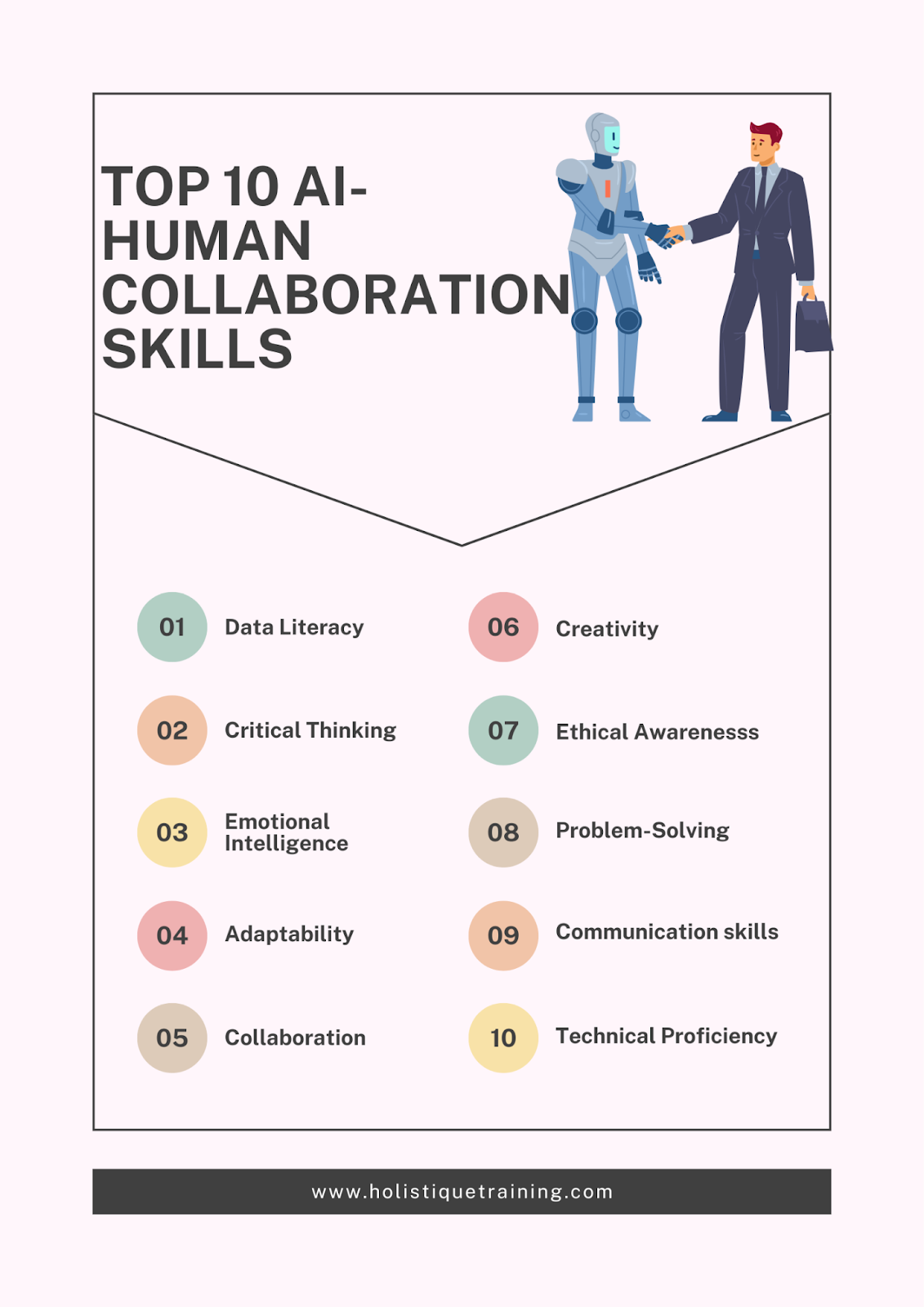
4- Adaptability:
The rapid pace of technological change requires employees to be adaptable and open to learning. Embracing new tools and methodologies will enable individuals to thrive in an evolving work environment. Adaptability involves not only a willingness to learn new skills but also the ability to pivot quickly in response to changing circumstances.
Employees who are adaptable are better equipped to handle uncertainty and embrace innovation. This flexibility is essential in a hybrid workforce where roles and responsibilities may shift as new technologies are introduced or as organizational needs evolve.
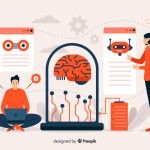
As artificial intelligence becomes increasingly embedded in how we work, learn, and solve problems, the ability to think adaptively is emerging as a vital skill for success. In the age of human-AI synergy, it's not just about learning new tools—it’s about shifting how we approach challenges, make decisions,
5- Collaboration Skills:
Effective collaboration with AI systems involves understanding how to leverage their capabilities while contributing human insights. Employees should cultivate teamwork skills that facilitate seamless interaction with both AI and human colleagues. This includes being open to feedback, actively participating in discussions, and sharing knowledge with others.
Strong collaboration skills enhance the overall effectiveness of teams, allowing for a more integrated approach to problem-solving. Employees who can work well with both AI and their peers can drive better outcomes and foster a culture of cooperation and shared success.
6- Ethical Awareness:
As AI raises ethical considerations, employees must develop an understanding of the ethical implications of AI use. This awareness will guide decision-making and ensure responsible AI deployment. Employees should be familiar with the potential biases in AI systems, data privacy issues, and the broader societal impacts of AI technologies.
Ethical awareness is crucial for maintaining public trust and ensuring that AI is used responsibly. Employees who prioritize ethics in their work can help organizations navigate complex moral dilemmas, ensuring that AI applications align with the values and expectations of stakeholders.

As artificial intelligence continues to influence decision-making in healthcare, finance, justice, and beyond, questions around fairness, accountability, and transparency have moved to the forefront of AI development. This course introduces the ethical challenges posed by AI systems and focuses on explainable AI (XAI) as a critical component for
Mastering these skills is essential for employees to effectively navigate the complexities of human-AI collaboration. As organizations increasingly rely on AI technologies, fostering a workforce equipped with these competencies will not only enhance productivity and innovation but also create a more resilient and adaptable organizational culture. By investing in skill development and promoting a culture of continuous learning, organizations can empower their employees to thrive in an AI-driven future, ultimately driving greater success and sustainability.
The Role of Humans in an AI-Driven Future
The future of work will undoubtedly be shaped by AI technologies, but the role of humans remains paramount. While AI excels at processing data and automating tasks, humans bring essential qualities that machines cannot replicate. Here are key aspects of the human role in an AI-driven future:
Strategic Decision-Makers:
Humans will continue to be essential in making strategic decisions that require nuanced understanding and contextual awareness. While AI can providedata-driven insights, it lacks the ability to fully comprehend the complexities of human emotions, ethical considerations, and cultural nuances. Human decision-makers will be responsible for interpreting AI outputs and integrating them into broader organizational strategies.
This role ensures that AI applications align with organizational values and long-term goals. Humans can weigh the potential benefits and risks of AI recommendations, ensuring that decisions are made with a holistic perspective.
Creative Innovators:
Creativity is a distinctly human trait that cannot be replicated by AI. While AI can assist in generating ideas and optimizing processes, the spark of innovation often comes from human intuition and imagination. Humans will drive creative endeavors in fields such as art, design, marketing, and product development, using AI as a tool to enhance their creative processes.
By leveraging AI to handle routine tasks, humans can dedicate more time to brainstorming and experimenting with new ideas. This collaboration can lead to groundbreaking innovations that push boundaries and redefine industries.
Ethical Guardians:
As AI systems become more integrated into daily life, ethical considerations surrounding their use will be paramount. Humans will play a crucial role in ensuring that AI technologies are developed and deployed responsibly. This includes addressing issues such as bias, privacy, and accountability, and advocating for ethical guidelines in AI practices.
Ethical guardianship helps maintain public trust in AI technologies. By prioritizing ethical considerations, humans can guide organizations in making responsible choices that benefit society as a whole.
Relationship Builders:
Human interaction is fundamental to building relationships, whether in business or personal contexts. As AI takes over routine tasks, humans will focus on nurturing connections with clients, colleagues, and stakeholders. This role involves understanding emotional cues, demonstrating empathy, and fostering collaboration.
Strong relationships enhance teamwork and customer loyalty, driving organizational success. Humans can leverage AI to gather insights about customer preferences and behaviors, enabling them to tailor their interactions and build deeper connections.
Lifelong Learners:
The rapid evolution of AI technologies necessitates a commitment to continuous learning and skill development. Humans will need to adapt to new tools, methodologies, and industry standards, ensuring they remain relevant in an AI-driven landscape. This includes acquiring skills in data literacy, critical thinking, and emotional intelligence.
Lifelong learning fosters resilience and adaptability, enabling individuals to navigate career transitions and seize new opportunities. Organizations that prioritize employee development will cultivate a workforce that is equipped to thrive in a changing environment.

The rise of artificial intelligence is reshaping how we think, learn, and solve problems. In today’s fast-changing world, learning is no longer a linear process—it’s a dynamic interaction between human insight and machine intelligence. This course introduces the concept of hybrid intelligence and empowers participants to
Interdisciplinary Collaborators:
The complexity of AI applications often requires collaboration across various fields and disciplines. Humans will serve as connectors, bringing together diverse expertise to solve multifaceted problems. This interdisciplinary approach combines insights from technology, business, ethics, and social sciences, leading to more comprehensive solutions.
Collaborative efforts enhance innovation and problem-solving capabilities. By integrating diverse perspectives, organizations can develop AI solutions that are more effective and aligned with societal needs.
In an AI-driven future, the role of humans will be integral to the successful integration and utilization of AI technologies. While AI can automate tasks and provide valuable insights, human skills in strategic thinking, creativity, ethics, relationship building, lifelong learning, and interdisciplinary collaboration will remain essential. By embracing these roles, individuals and organizations can harness the full potential of AI, driving innovation, improving decision-making, and creating a positive impact on society. As we move forward, fostering a collaborative relationship between humans and AI will be key to shaping a future that benefits everyone.
Conclusion
The integration of AI into the workforce represents a transformative opportunity for organizations and employees alike. Human-AI collaboration is not just about technology; it is about harnessing the unique strengths of both humans and machines to create a more efficient, innovative, and engaged workforce. While challenges and risks exist, the benefits of this collaboration far outweigh the drawbacks. By developing essential skills and embracing the evolving role of humans in an AI-driven future, individuals and organizations can thrive in a hybrid workforce. As we move forward, fostering a culture of collaboration, trust, and ethical responsibility will be key to unlocking the full potential of human-AI partnerships, paving the way for a brighter and more productive future.