

- Table of Contents
- Introduction
- What is Unlearning in the Workplace?
- Unlearning and Relearning: Key Differences
- Knowing When It Is Time to Unlearn
- 1. Decreased Performance or Diminishing Returns
- 2. Resistance to Change Among Teams
- 3. Misalignment with Organizational Goals or Strategy
- 4. Rapid Industry or Technological Evolution
- 5. Repetitive Mistakes and Inefficiencies
- 6. Feeling Stuck or Stagnant
- 7. Feedback from Peers, Mentors, or Clients
- Why Employees Should Practice Unlearning
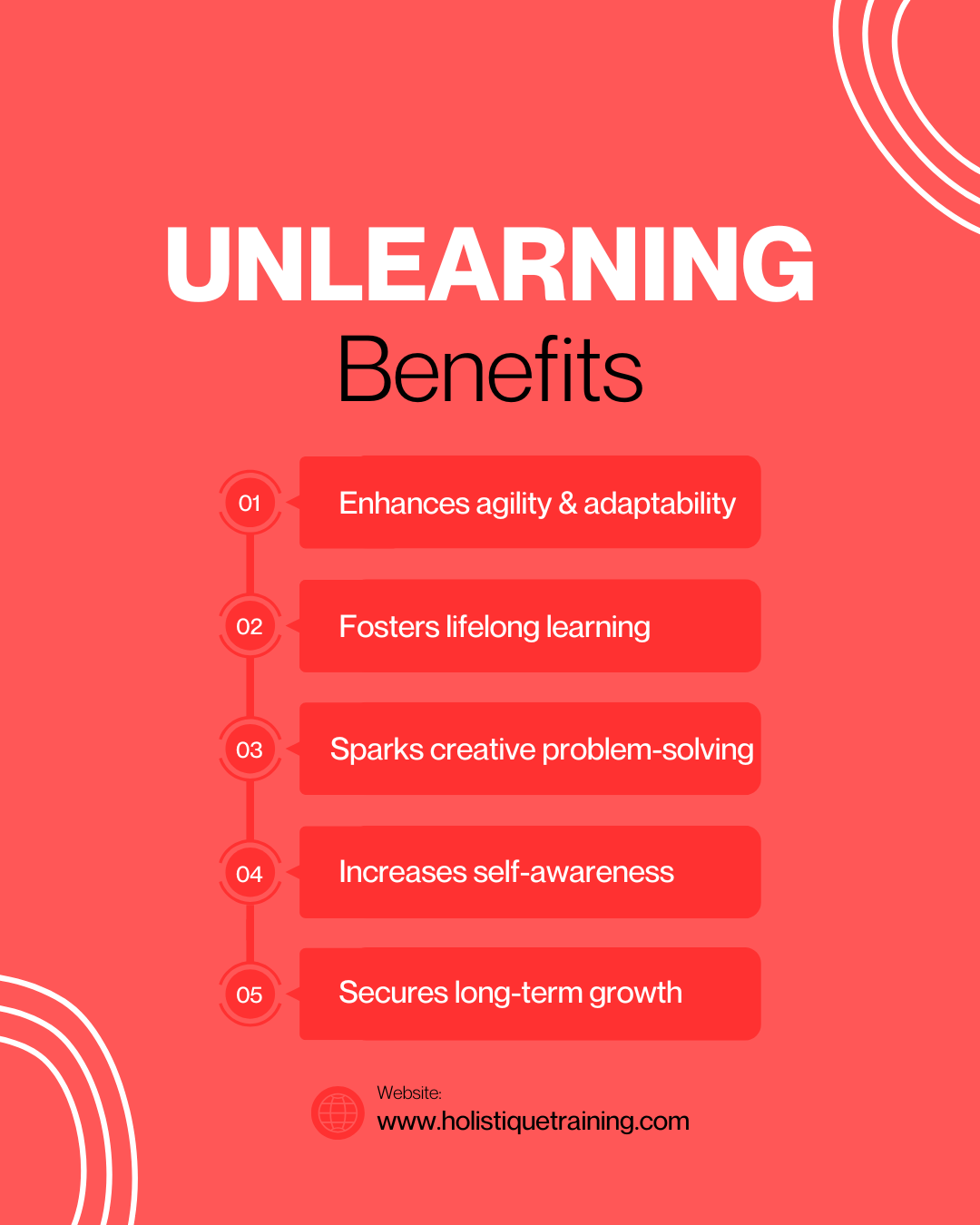
- 1. Enhances Agility and Adaptability
- 2. Fosters Continuous Improvement and Lifelong Learning
- 3. Sparks Innovation and Creative Problem-Solving
- 4. Increases Self-Awareness and Emotional Intelligence
- 5. Secures Career Relevance and Long-Term Growth
- 6. Reduces Professional Burnout and Frustration
- 7. Strengthens Problem-Solving Across Teams
- Why Management Should Unlearn the “That’s How We Do Things” Thought
- 1. Encourages Innovation and Creative Problem-Solving
- 2. Improves Organizational Agility
- 3. Enhances Employee Engagement and Retention
- 4. Aligns Leadership with Organizational Strategy
- 5. Strengthens Organizational Resilience
- 6. Promotes a Culture of Continuous Learning
- 7. Reduces Inefficiency and Costs
- 1. Embrace Self-Reflection
- 2. Seek and Act on Feedback
- 3. Challenge Assumptions and Mental Models
- 4. Create Psychological Safety
- 5. Integrate Iterative Learning
- 6. Document Insights and Lessons Learned
- 7. Celebrate Progress and Positive Change
- 8. Start Small and Scale Gradually
- 9. Leverage Learning Resources and Mentorship
- 10. Foster a Growth Mindset
- Conclusion
Introduction
Workplace success is often associated with acquiring knowledge, mastering skills, and building expertise. Professionals spend years learning processes, systems, and organizational norms to become proficient in their roles. Yet, as industries evolve and technology accelerates, the skills and assumptions that once guaranteed success may no longer be effective. The ability to let go of outdated approaches, reexamine assumptions, and adopt new methods is becoming a critical competency in modern organizations.
This blog post explores the concept of unlearning in the workplace. It defines unlearning, distinguishes it from relearning, identifies when it is necessary, and explains why both employees and management should embrace it. Additionally, it offers actionable best practices for learning to unlearn effectively. By understanding unlearning and integrating it into organizational culture, companies and professionals can remain agile, innovative, and resilient in an ever-changing professional landscape.
What is Unlearning in the Workplace?
Unlearning in the workplace refers to the conscious process of identifying and discarding outdated knowledge, habits, or mental models that no longer serve personal, team, or organizational goals. Unlike traditional learning, which focuses on acquiring new skills, unlearning emphasizes letting go of established beliefs or practices that may hinder progress.
It is important to recognize that unlearning is not simply forgetting information. It is an intentional act of questioning assumptions, critically assessing routines, and removing behaviors that obstruct growth. For example, an organization may have long-standing procedures for project approval that once ensured efficiency but now slow down innovation in a digital-first environment. Unlearning these procedures allows employees to adopt more agile, collaborative approaches.
Unlearning can occur at multiple levels:
- Individual Level – Employees reassess habits, mindsets, and skills, letting go of practices that limit their ability to adapt.
- Team Level – Teams evaluate workflows, communication patterns, and collaboration methods that may impede performance.
- Organizational Level – Companies challenge traditional policies, hierarchies, or decision-making processes that prevent responsiveness to market changes.
In essence, unlearning is the deliberate removal of “what we know” to create space for “what we need to know” to succeed in the evolving workplace.
Unlearning and Relearning: Key Differences
While unlearning and relearning are related, they are not synonymous. Understanding the distinction is crucial for professionals and managers alike.
Unlearning involves letting go of outdated mental models or behaviors. It is the process of challenging ingrained assumptions and recognizing that previously successful approaches may no longer be effective. Unlearning is often uncomfortable because it confronts deeply held beliefs, requiring reflection, openness, and a willingness to admit past approaches may be flawed.
Relearning, on the other hand, refers to acquiring new knowledge or skills after discarding old ones. It is a constructive process aimed at replacing outdated practices with more relevant, effective methods. For instance, a marketing professional may unlearn assumptions about traditional advertising channels and relearn strategies for social media engagement and data-driven campaigns.
Key differences include:
Aspect | Unlearning | Relearning |
Focus | Letting go of outdated practices | Acquiring new skills or knowledge |
Emotional Response | Often uncomfortable, challenging | Usually engaging and motivating |
Purpose | Make space for innovation | Improve effectiveness and adapt to change |
Process | Reflect, question, discard | Train, experiment, apply |
Outcome | Removal of mental barriers | Implementation of new, relevant skills |
Together, unlearning and relearning form a continuous cycle of growth. Professionals who master this cycle are more adaptable, better equipped to embrace change, and more likely to contribute to organizational success.
Knowing When It Is Time to Unlearn
Recognizing the need to unlearn is not always straightforward. Many habits, routines, and assumptions feel comfortable precisely because they have been practiced for years. Yet, comfort can be misleading; what once enabled efficiency may now impede growth, innovation, or adaptability. Understanding the signals that indicate it’s time to unlearn is crucial for both employees and leaders who aim to remain effective in a constantly changing workplace.
1. Decreased Performance or Diminishing Returns
79% of CEOs say a skills gap in their workforce threatens future growth, highlighting the need for employees to unlearn before learning new skills. If a process, tool, or skill that previously delivered strong results now consistently underperforms, it is a clear signal that unlearning may be necessary. For example, sales strategies that worked a decade ago may no longer resonate with today’s digitally empowered customers. Similarly, manual workflows that once ensured quality may now slow down productivity in an era of automation. Recognizing these diminishing returns allows professionals to pause, reflect, and consider whether clinging to traditional methods is hindering performance.
2. Resistance to Change Among Teams
When teams consistently push back against new initiatives, technologies, or methods, it may indicate that deeply ingrained practices or beliefs are creating friction. Rather than resisting innovation outright, these behaviors often reveal underlying attachment to outdated routines. Observing patterns of hesitation, repeated objections, or recurring friction can help leaders and employees identify which practices need to be unlearned to foster smoother adoption of new ways of working.
3. Misalignment with Organizational Goals or Strategy
As organizations evolve, certain processes or behaviors that once aligned with objectives may become misaligned with current goals. For instance, a company shifting toward a customer-centric approach may find that rigid internal reporting structures or siloed workflows inhibit responsiveness to client needs. Identifying misalignment between established practices and organizational direction signals a need to unlearn habits that no longer support strategic outcomes.
4. Rapid Industry or Technological Evolution
Industries today are changing faster than ever. Emerging technologies, new regulations, shifting customer expectations, and competitive pressures can render once-critical skills or knowledge obsolete. Professionals who cling to familiar methods risk falling behind. For example, marketing teams that rely solely on traditional advertising channels may struggle to reach audiences effectively in a social media-driven world. Monitoring industry trends and adapting accordingly helps pinpoint areas where unlearning is necessary to remain relevant.
5. Repetitive Mistakes and Inefficiencies
When mistakes, inefficiencies, or conflicts occur repeatedly despite best efforts, it may indicate that certain approaches, assumptions, or mental models are outdated. Repeated errors are not simply individual failings—they often reflect systemic reliance on practices that no longer produce desired outcomes. Identifying these patterns provides an opportunity to critically assess, discard, and replace ineffective behaviors with strategies better suited to current challenges.
6. Feeling Stuck or Stagnant
Professionals who feel stuck in their roles, unable to grow, innovate, or achieve results, may need to unlearn limiting beliefs or routines. This sense of stagnation often stems from mental barriers, such as “we’ve always done it this way,” which prevent exploration of alternative approaches. Recognizing this feeling as a signal for unlearning can prompt proactive change, revitalizing both performance and engagement.
7. Feedback from Peers, Mentors, or Clients
External feedback often provides a mirror for identifying what needs to be unlearned. Constructive criticism from supervisors, colleagues, or clients may highlight behaviors, practices, or assumptions that are outdated or ineffective. Rather than dismissing such feedback, employees who embrace it as a cue for unlearning create opportunities for meaningful improvement.
By staying attentive to these indicators—performance gaps, resistance, misalignment, industry shifts, repetitive errors, stagnation, and feedback—professionals and leaders can proactively identify when unlearning is necessary. Recognizing the right moment to unlearn not only prevents the persistence of outdated practices but also opens the door to growth, innovation, and sustained success.
Why Employees Should Practice Unlearning
In a rapidly changing workplace, employees who cling to old habits and rigid routines risk falling behind. Fortunately, statistics show that87% of employees realize the necessity of acquiring new expertise throughout their careers. In addition,The World Economic Forum reports that around 50% of employees will need reskilling by 2025.Practicing unlearning, however, equips professionals with the ability to adapt, innovate, and maintain relevance over time. Unlearning is not merely a reactive strategy—it is a proactive approach to growth that empowers individuals to remain agile and competitive.
1. Enhances Agility and Adaptability
Work environments today are dynamic, with technological advancements, evolving business models, and shifting customer expectations demanding rapid adjustment. Employees who practice unlearning can release outdated assumptions and behaviors, allowing them to adopt new approaches with ease. For example, a project manager accustomed to traditional waterfall methodologies may unlearn rigid timelines and embrace agile frameworks, enabling their team to respond more effectively to changing project requirements. This agility enhances both personal effectiveness and team performance.
2. Fosters Continuous Improvement and Lifelong Learning
Unlearning encourages employees to reflect on their methods, evaluate outcomes, and question the effectiveness of established practices. By regularly challenging their assumptions, professionals develop a mindset of continuous improvement. This self-awareness drives ongoing learning and skill development, which not only improves current job performance but also prepares employees for future roles and responsibilities. For instance, a sales representative who unlearns outdated cold-calling strategies can relearn techniques like personalized digital engagement, boosting success in modern sales environments.
3. Sparks Innovation and Creative Problem-Solving
Holding on to familiar ways of doing things often limits creativity. Unlearning allows employees to break free from conventional thinking, enabling fresh perspectives and innovative solutions. Consider a product development team that has always relied on incremental improvements. By unlearning the notion that minor adjustments are sufficient, they might embrace radical redesigns or disruptive innovations, creating offerings that better meet customer needs and differentiate the company in the market.
4. Increases Self-Awareness and Emotional Intelligence
Unlearning involves critical reflection on behaviors, habits, and mindsets. Employees who practice unlearning gain insight into personal biases, blind spots, and limitations that may have gone unnoticed. This heightened self-awareness fosters emotional intelligence, improving interpersonal relationships, collaboration, and conflict resolution. For example, an employee who unlearns the habit of dominating team discussions may develop stronger listening skills, creating space for diverse perspectives and more effective decision-making.

As a leader, understanding and utilising emotional intelligence and mastering effective communication styles are essential skills to get the most out of your team. It’s important that your direct reports find you approachable and relatable, meaning they feel confident raising issues and suggesting ideas to
5. Secures Career Relevance and Long-Term Growth
Industries evolve, and skills that were once considered essential can quickly become obsolete. Employees who resist change may struggle to remain employable or miss out on growth opportunities. Practicing unlearning ensures that professionals remain current, adaptable, and prepared for emerging trends or technologies. For example, a marketing specialist who unlearns traditional print-focused strategies and embraces digital analytics and AI-driven campaigns positions themselves as an invaluable asset to the organization.
6. Reduces Professional Burnout and Frustration
Holding on to outdated practices in the face of new demands often creates stress, inefficiency, and frustration. Employees who unlearn counterproductive habits or assumptions can work more effectively, reduce friction, and experience greater satisfaction in their roles. By consciously letting go of ineffective routines, professionals can focus energy on activities that produce meaningful results and personal fulfillment.
7. Strengthens Problem-Solving Across Teams
Unlearning is not only an individual advantage; it positively impacts team dynamics. Employees who model unlearning encourage peers to question assumptions, explore alternative approaches, and embrace experimentation. This collective mindset fosters stronger collaboration, shared learning, and improvedproblem-solving outcomes, creating a culture where innovation becomes a natural part of daily work.
In summary, practicing unlearning equips employees with the tools to stay agile, continuously improve, think creatively, enhance self-awareness, maintain career relevance, and work more effectively both individually and in teams. By integrating unlearning into their professional habits, employees transform challenges and disruptions into opportunities for growth, innovation, and long-term success.
Why Management Should Unlearn the “That’s How We Do Things” Thought
Leadership sets the tone for organizational culture, shaping the attitudes, behaviors, and mindsets of employees at every level. When management clings to the mindset of “that’s how we do things,” it often perpetuates outdated processes, stifles innovation, and limits the organization’s ability to adapt to change. Unlearning this entrenched thinking is essential for leaders who want to cultivate agile, high-performing teams and sustain long-term success.
1. Encourages Innovation and Creative Problem-Solving
Leaders who rely on established routines and traditional approaches inadvertently discourage experimentation. Teams may feel that new ideas are unwelcome or impractical, reinforcing a culture of conformity. By unlearning rigid practices, management signals that questioning assumptions and proposing innovative solutions are valued. For instance, a department head who abandons rigid reporting structures may encourage cross-functional brainstorming sessions, resulting in more creative, actionable solutions to complex challenges.
2. Improves Organizational Agility
In fast-paced business environments, the ability to pivot quickly is critical. Managers who cling to legacy processes often slow down decision-making, limit responsiveness, and prevent teams from seizing new opportunities. Unlearning outdated practices—such as inflexible approval chains or excessive bureaucratic layers—enables leaders to adopt agile methodologies that accelerate workflows, empower employees, and support rapid adaptation to evolving market conditions.
3. Enhances Employee Engagement and Retention
Employees increasingly value workplaces that encourage flexibility, learning, and autonomy. Leaders who insist on “this is how it’s always done” risk creating frustration, disengagement, and higher turnover among top talent. By unlearning rigid thought patterns, management fosters a culture where employees feel heard, empowered, and motivated to contribute. For example, leaders who adopt open-door policies, encourage feedback, and implement participative decision-making help retain skilled professionals who might otherwise leave for more progressive environments.
4. Aligns Leadership with Organizational Strategy
As organizations evolve, strategic priorities often shift towardinnovation, customer-centricity, or digital transformation. Managers who remain anchored in outdated practices can hinder progress, misalign teams with business goals, and reduce overall competitiveness. Unlearning entrenched routines allows leaders to embrace strategic initiatives, implement new processes, and model behaviors that reflect the organization’s vision. This alignment ensures that teams work cohesively toward shared objectives rather than resisting necessary changes.
5. Strengthens Organizational Resilience
Rigid leadership practices can make organizations vulnerable to disruption. In contrast, managers who regularly question and unlearn old habits cultivate resilience, preparing teams to navigate uncertainty and unexpected challenges. For example, during a sudden market shift, a leader who has unlearned inflexible budgeting practices may quickly reallocate resources to support new priorities, minimizing negative impact and maintaining operational continuity.
6. Promotes a Culture of Continuous Learning
When management models unlearning, it sets an example for employees, signaling that growth, adaptation, and reflection are valued at all levels. This encourages teams to adopt the same mindset, creating an organization-wide culture of continuous learning. Employees become more willing to challenge assumptions, share insights, and innovate, leading to sustained improvement and competitive advantage.
7. Reduces Inefficiency and Costs
Outdated practices often persist simply because “we’ve always done it this way,” even if they are inefficient or costly. Leaders who unlearn unnecessary rituals, redundant approvals, or legacy processes streamline operations and free up resources for higher-value activities. This practical approach not only improves productivity but also strengthens the organization’s ability to reinvest in growth and innovation initiatives.
In summary, management’s ability to unlearn entrenched beliefs and practices is a cornerstone of modern leadership. By challenging “that’s how we do things” thinking, leaders encourage innovation, enhance agility, boost employee engagement, align actions with organizational strategy, build resilience, promote a learning culture, and reduce inefficiency. Leaders who embrace unlearning do more than adapt—they cultivate environments where employees, teams, and the organization as a whole can thrive amid change.

Effective leadership is crucial to the success of any business. This program will help you harness your internal leadership potential by exploring effective strategies, motivating team members, and mastering negotiation and influencing skills to achieve your goals. You will examine
Learning to Unlearn: Best Practices and Tips
Unlearning is a skill that requires intention, practice, and patience. Unlike acquiring new knowledge, unlearning asks professionals to confront habits, assumptions, and routines that have been deeply ingrained over years. While challenging, it is a critical capability for employees and leaders who aim to stay relevant and thrive in a rapidly evolving workplace. The following best practices and tips provide a structured approach to cultivating the ability to unlearn effectively.
1. Embrace Self-Reflection
Self-reflection is the cornerstone of unlearning. Professionals should dedicate time to evaluate their daily routines, decision-making patterns, and long-held assumptions. Questions such as “Which practices are no longer effective?” or “Am I holding onto a belief that limits growth?” can uncover habits that require change. Reflection helps employees move from unconscious adherence to outdated methods toward conscious awareness of what needs to be discarded.
2. Seek and Act on Feedback
External perspectives are invaluable in identifying what to unlearn. Colleagues, mentors, supervisors, and even clients can highlight behaviors, approaches, or assumptions that hinder progress. Importantly,feedback should not be ignored; it should be actively processed and integrated into personal development plans. For example, an employee who receives repeated feedback about over-reliance on manual reporting might realize the need to adopt automated solutions, enhancing efficiency and accuracy.
3. Challenge Assumptions and Mental Models
Many unlearning opportunities arise from questioning ingrained assumptions. Professionals should critically examine the rationale behind existing processes: Are they still relevant? Do they truly solve problems or simply maintain tradition? For instance, a team accustomed to holding weekly status meetings might discover that asynchronous updates are more efficient and reduce meeting fatigue. Challenging assumptions creates space for innovative solutions and better decision-making.
Outdated Practice | Modern Replacement |
Rigid hierarchical approvals for all decisions | Agile, decentralized decision-making |
Annual performance reviews only | Continuous feedback and coaching |
Siloed team work | Cross-functional collaboration |
Reliance on legacy software and manual processes | Digital tools and automation |
Avoiding experimentation due to fear of failure | Iterative testing and learning mindset |
4. Create Psychological Safety
Unlearning can feel uncomfortable because it requires admitting that prior methods or beliefs were ineffective. Organizations that foster psychological safety empower employees to experiment, take risks, and make mistakes without fear of judgment or punishment. When employees feel safe, they are more willing to explore new approaches and unlearn outdated behaviors. Leaders can reinforce this by openly acknowledging their own mistakes and modeling adaptive behaviors.
5. Integrate Iterative Learning
Unlearning should not be viewed as a one-time event but as a continuous cycle intertwined with learning. Professionals can adopt an iterative approach: test new methods, evaluate outcomes, discard what doesn’t work, and refine strategies. For example, a marketing team experimenting with social media campaigns may discard ineffective messaging strategies while continuously improving approaches based on real-time analytics.
6. Document Insights and Lessons Learned
Recording insights from the unlearning process ensures that lessons are not lost and can be shared across teams. Documentation serves as a reference for avoiding repeated mistakes and accelerates organizational learning. For instance, after shifting to a new project management tool, teams can note best practices, common pitfalls, and tips for smoother adoption, ensuring future employees benefit from collective experience.
7. Celebrate Progress and Positive Change
Recognizing and rewarding successful unlearning reinforces its value and encourages continued practice. Celebrations can range from public acknowledgment in team meetings to recognition programs that highlight individuals or groups who have adopted innovative approaches. Positive reinforcement helps shift organizational culture, making unlearning a respected and aspirational behavior.
8. Start Small and Scale Gradually
Unlearning does not always require sweeping organizational changes. Professionals can begin with small, manageable adjustments that challenge existing habits and gradually expand to more significant changes. For example, an employee might start by experimenting with new time management techniques before applying similar principles to larger workflows. Incremental steps reduce resistance, build confidence, and demonstrate the tangible benefits of unlearning.
9. Leverage Learning Resources and Mentorship
Engaging with external resources—books, courses, webinars, or mentors—can provide fresh perspectives and insights that facilitate unlearning. Mentors who have navigated similar transitions can offer guidance on which practices are worth discarding and which new approaches yield the best outcomes. Accessing diverse viewpoints broadens understanding and accelerates the unlearning process.
10. Foster a Growth Mindset
Finally, unlearning is most effective when rooted in a growth mindset—the belief that abilities and intelligence can develop through effort and adaptation. Professionals with a growth mindset view unlearning not as a threat but as an opportunity to evolve. Embracing curiosity, resilience, and openness ensures that unlearning becomes a natural, ongoing component of professional development rather than a reactive or sporadic effort.
By systematically applying these practices, employees and leaders can develop unlearning as a habitual skill. Organizations that embed these approaches cultivate a culture of continuous improvement, innovation, and adaptability, empowering teams to navigate change with confidence and purpose.

This comprehensive training course is designed to empower current and aspiring leaders with advanced change management capabilities. Participants will gain in-depth knowledge of the tools, techniques, and strategic thinking required to lead successful organizational transformations. At its core, the course emphasizes the
Conclusion
Unlearning in the workplace is no longer an optional skill—it is a necessity. The rapid pace of technological advancement, market evolution, and organizational change demands that professionals and leaders constantly reassess assumptions, behaviors, and methods. Holding onto outdated practices limits growth, reduces innovation, and threatens long-term career and organizational success.
For employees, unlearning enables agility, creativity, and relevance. It allows professionals to shed ineffective habits, embrace new approaches, and continually evolve their skill sets. For management, unlearning dismantles entrenched norms, fosters innovation, and creates an environment where employees feel empowered to challenge assumptions and contribute to meaningful change.
Learning to unlearn is a deliberate, reflective, and ongoing process. By embracing self-reflection, feedback, experimentation, and knowledge sharing, organizations and individuals can transform resistance to change into opportunities for innovation and growth. In a workplace defined by constant disruption, unlearning is not just a strategy for adaptation—it is a pathway to sustained professional excellence, organizational resilience, and enduring success.